For a country with a $4.5 trillion GDP, a 6 billion deficit is a drop in the bucket and easily covered from taxes. It’s just a political question of what you want to fund.
For comparison, the New York City public transport system (MTA) runs a deficit of about $3 billion. Six billion for universal healthcare in a country of 83.5 million people seems like a total bargain.
To help you think a bit more clearly: the health insurance system is not a for-profit system, even though some people mistakenly hold on to the idea that it should be. It is a risk spreading mechanism.
I lived under the very system this principle enabled and I can tell you that without the profit motive we were cold and starving since there was no motivation for people to work and sew clothes or grow food.
I live under a system where even very expensive treatments are covered by the state using taxpayer money, and I'm not starving. Sometimes you need to optimize for human dignity.
10 Billions of that deficit are coming from the State paying insufficient contributions for unemployed insured people. It is a policy choice to offload those costs onto Publicly-Insured-People (excluding rich and healthy people) instead of funding them through taxes (including those groups).
The German Healthcare System also has some historically developed peculiarities that don't make much sense in today's age, but they are difficult to address without pissing people off (The duality of Private and Public Health Insurance, allowing the first one to get rich and very healthy people out of the risk pool, and then loopholes to switch back into the public system when they grow older and don't want to pay the then high prices in private insurance)
The Hospital Reform is already working to reduce costs by reducing the number of small hospitals, and concentrate them into bigger ones. (As a side effect, quality of care will increase too, since outcomes are correlated with experience)
Also more care will be shifted to outpatient setting.
Otherwise we are fighting with the demographic change. But these problems are also hurting all other developed nations including the US, where funding problems in Medicaid are also expected in the next decades
tl:dr We have problems due to the demographic change, but these are in line with other developed nations. There are some efforts to address them, but politicians are hesitant to do real reforms, because old people have the most voting power
I tend to believe that Communism provided enough of a threat to the Western elites that they felt forced to keep their countries visibly better. Not ready to defend this argument right now, I just think it does hold water.
Among the populations of all regions of the EU, only the city of Budapest identifies more with Europe than with their country or region. Even that might be just a protest against Orbán.
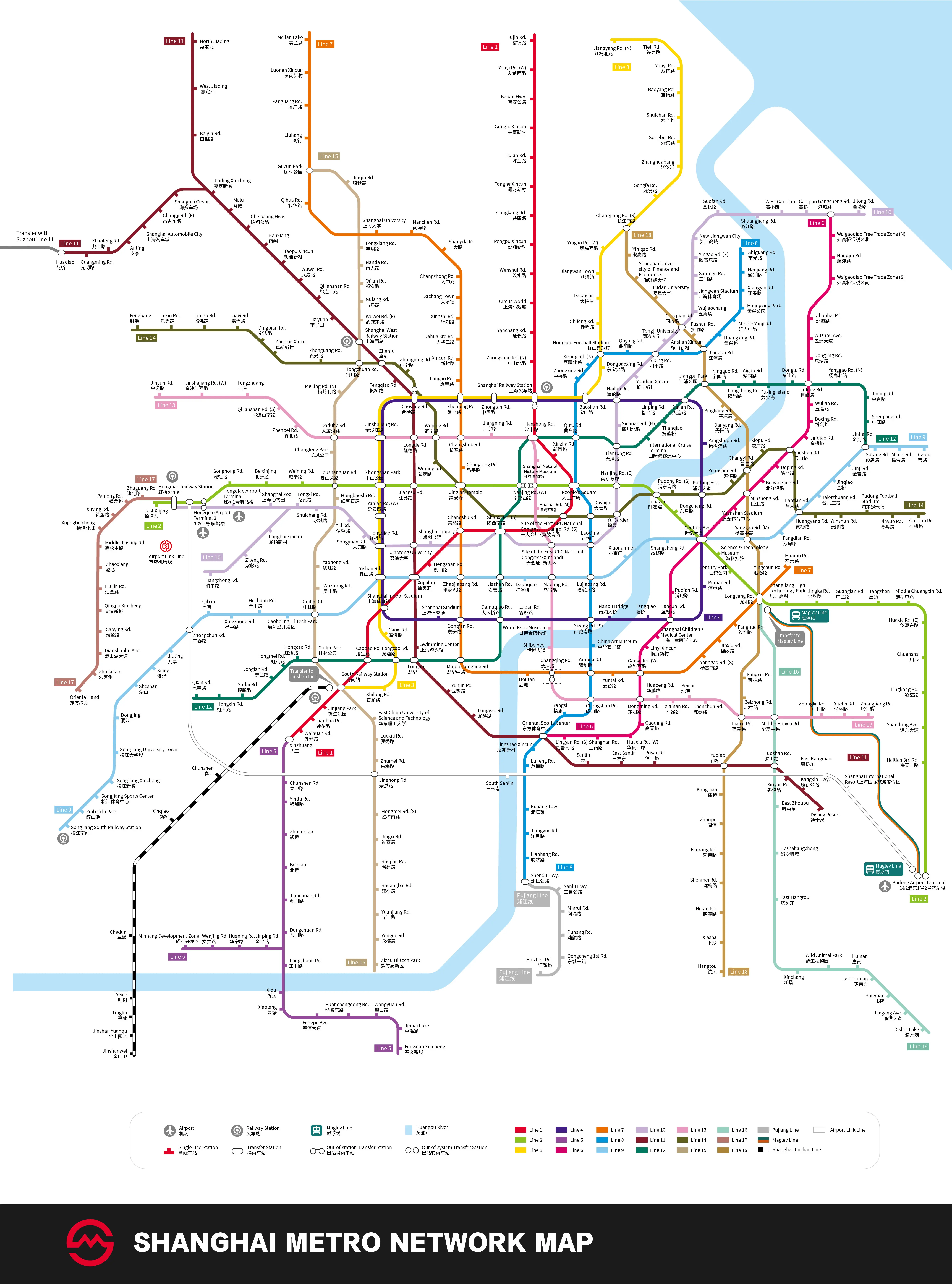
A subway is very different from an intercity railway network. For one, there's probably fewer different routes on the subway so trains conflict with each other less. Also, a subway doesn't have to accomodate freight traffic as well.
The German intercity rail network certainly identifies more lines, around 57 to Shanghai's 18, but this isn't directly related to the complexity of the topology. For example, line 14 appears to begin in Aachen and dead-end into Berlin, at which point line 95 begins in Berlin and runs out to Poland. As far as the routing is concerned, those could be the same line. But they're given different numbers. When the same thing happens (at a smaller scale) in Shanghai at the west end of line 9, the tail bit of the line going to Songjiang is still called "line 9". Note that if you want to ride out to Songjiang, at some point you're going to have to get off your "line 9" train and walk over to another station where a different "line 9" train will take you the rest of the way.
Discounting that, the two layouts appear to be roughly similar on the fundamentals, if differently scaled.
The most obvious difference is that the routes between major German cities are served by several lines. This is clearly meaningful in some cases; line 29 from Munich to Nuremberg continues north to Hamburg via Berlin while line 41 from Munich to Nuremberg continues northwest to Dortmund via Frankfurt and Cologne. On the other hand, line 8 from Munich to Nuremberg parallels line 29 for the entire length of line 8 (line 8 stops in Berlin, but line 29 doesn't).
My first guess would be that conflicts arise from the fact that the German trains are on the ground, and when their tracks cross, conflict can occur. This isn't true of a subway system; when subway tracks cross, they do it at different altitudes, allowing both tracks to be in use simultaneously.
Not only do tracks cross, trains also share tracks and platforms. In Shanghai only Line 3 and 4 share tracks and platforms.
Your map only shows ICE/IC lines, there are many more other lines which share the same tracks. This shows a more complete picture: https://www.deviantart.com/costamiri/art/Transit-diagram-of-... but it still doesn't show international trains and freight.
But yeah. I had the fortune to see Jaws on a bus in highland Bolivia (talk about a weird choice for forced onboard entertainment!), and it was more annoying than it was scary.


reply